Issued patent
Computer Vision Lends Precision to Robotic Grappling
An issued NASA patent from the Technology Transfer catalog.
About this technology
Overview
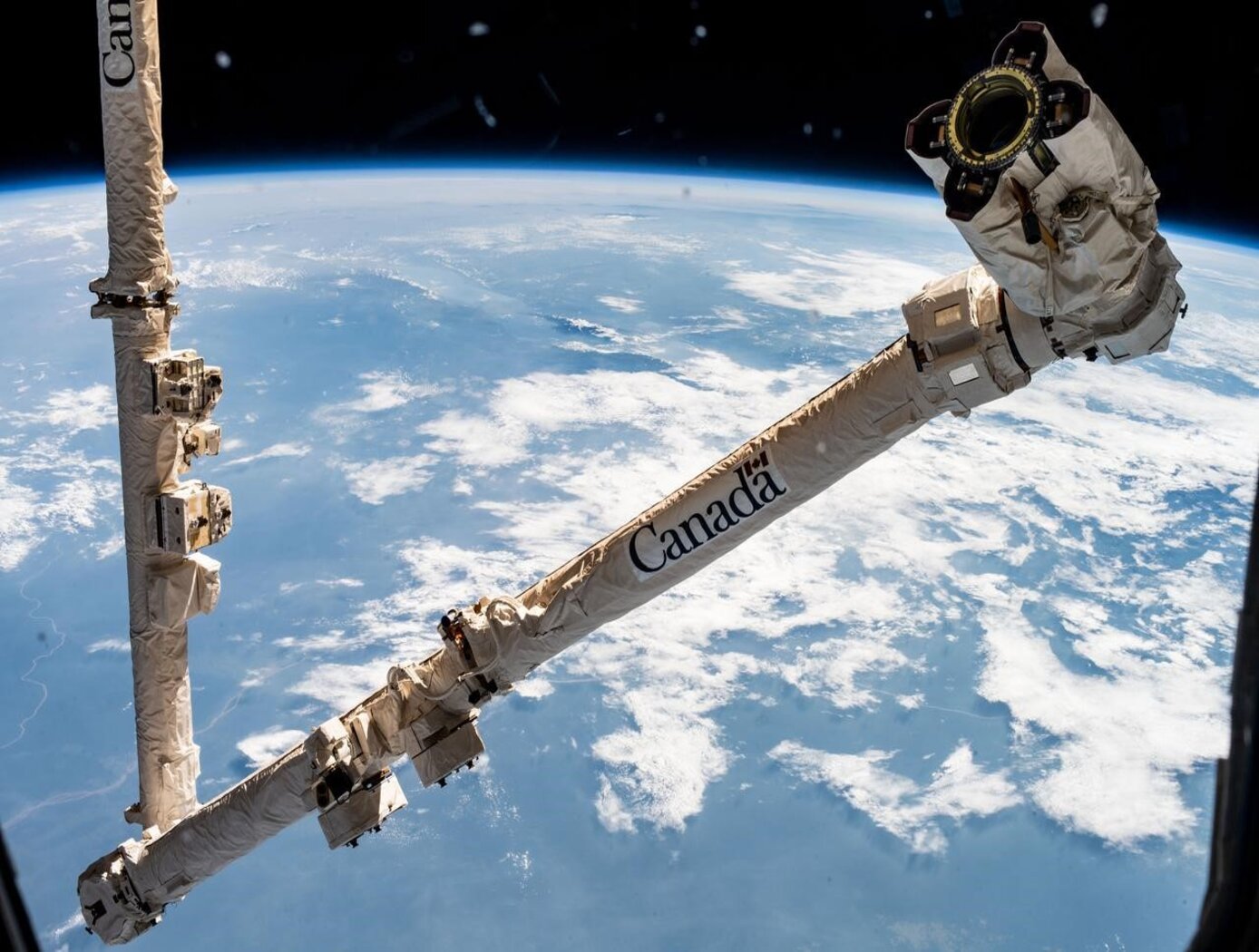
Innovators at NASA Johnson Space Center (JSC) have developed computer vision software that derives target posture determinations quickly and then instructs an operator how to properly align a robotic end-effector with a target that they are trying to grapple. As an added benefit, the software’s object identification capability can also help detect physical defects on targets. This technology was originally created to aid robotic arm operators aboard the International Space Station (ISS) that relied more heavily upon grappling instructional maneuvers derived from flight controllers on the ground at JSC’s Mission Control Center (MCC). Despite the aid of computer-based models to predict the alignment of both robotic arm and target, iterative realignment procedures were often required to correct botched grapple operations, costing valuable time. To solve this problem, NASA’s computer vision software analyzes the live camera feed from the robotic arm’s single borescope camera and provides the operator with the delta commands required for an ideal grasp operation. This process is aided by a machine learning component that monitors the camera feed for any of the ISS’s potential target fixtures. Once a target fixture is identified, proper camera and target parameters are automatically sequenced to prepare for grasping operations.