Patent — available for licensing
Variable Geometry Aircraft Wing Supported By Struts and/or Trusses
A NASA invention available to explore as a licensing opportunity.
About this technology
Overview
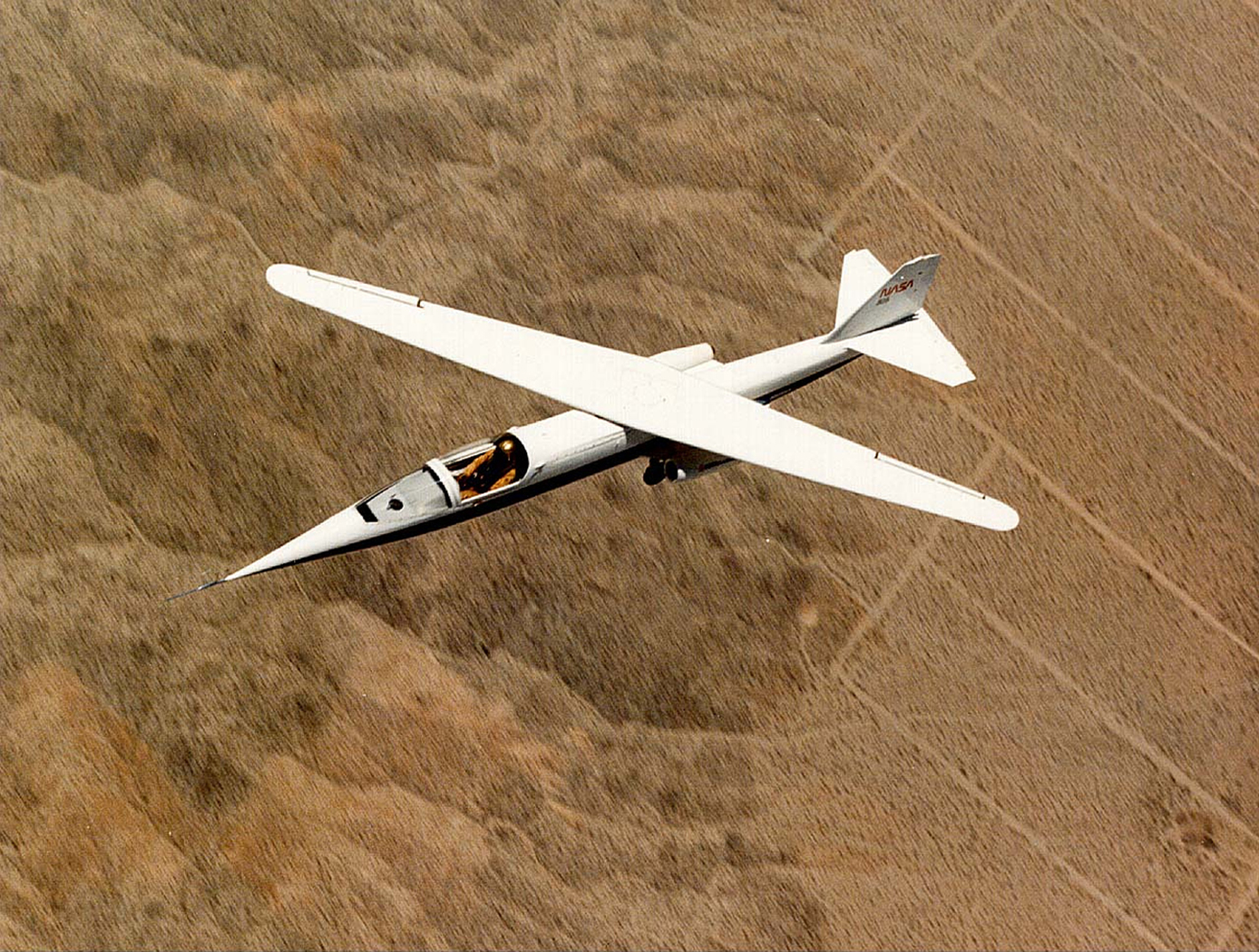
NASA has patented a new technology for an aircraft configuration that utilizes a strut/truss-braced oblique variable-sweep wing mounted on a constant cross-section geometry fuselage. In practice, the wing would start in a position closely aligned with the fuselage. This allows the aircraft to easily maneuver within the terminal/ramp area, and promotes higher density terminal operations. During the runup/checkout before takeoff, the wing would be rotated to the unswept position for increased climb performance. Once airborne, the wing would be pivoted to the sweep angle that provides the best aerodynamic performance and noise abatement at the current speed. During cruise, both speed and sweep angles could be adjusted accordingly. Before final approach, the wing would again be rotated to the perpendicular position in order to improve the aircraft's low-speed performance. As the aircraft departs the runway for the taxiway, the wing would be rotated again to align with the fuselage, greatly reducing the possibility of collisions during taxiing.